

Measles in Children: Symptoms, Risks, and How to Protect Your Family
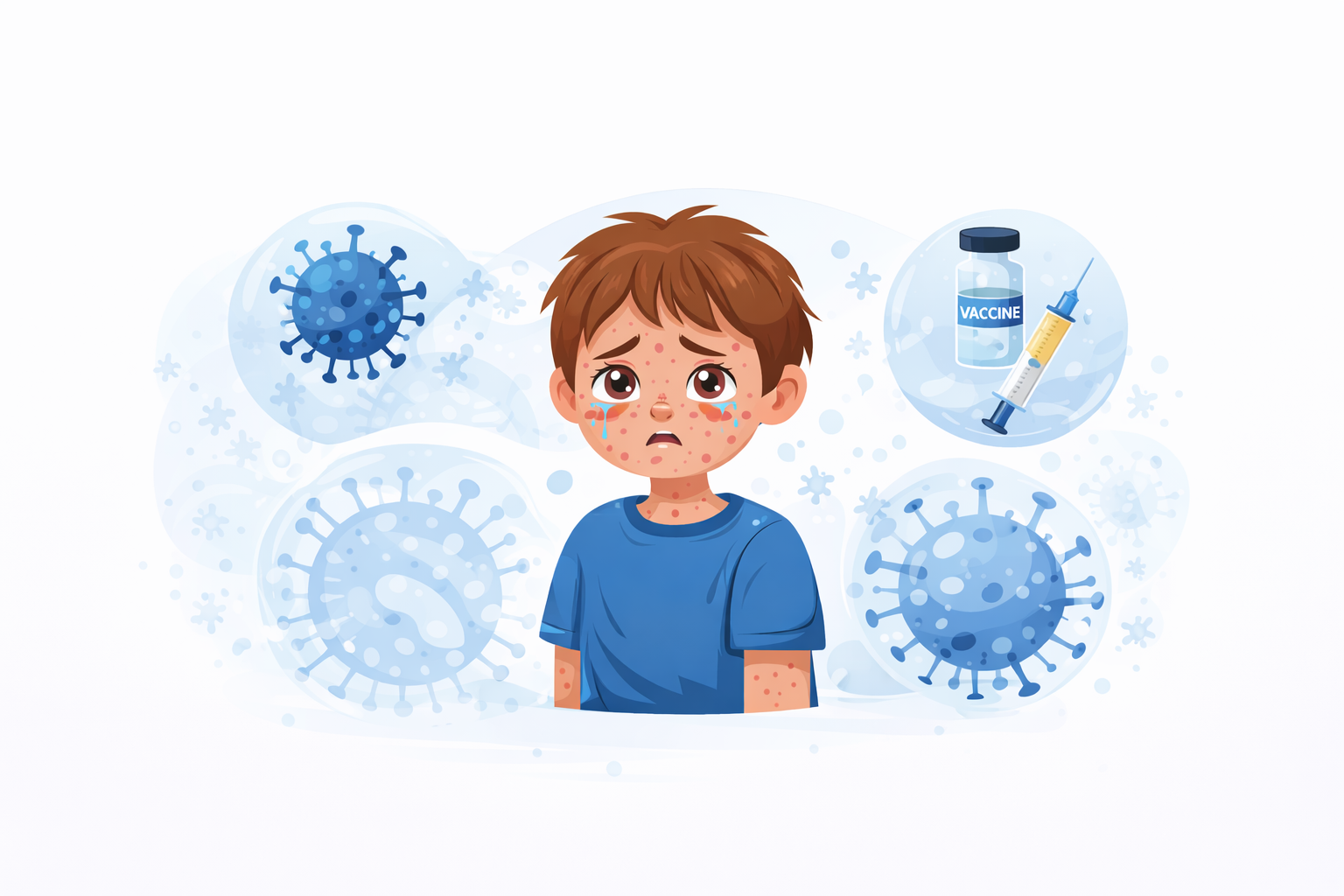
Over the past few years, measles—once nearly eliminated in the United States—has begun to reappear in communities across the country. While many parents have never seen measles firsthand, recent outbreaks are a reminder that this highly contagious disease still poses a real risk, especially in areas where vaccination rates have declined.
The good news is that measles is preventable, and understanding the symptoms and how it spreads can help keep children and communities safe.
What Is Measles?
Measles is a viral infection that spreads through the air when an infected person coughs, sneezes, or even breathes in a shared space. It is one of the most contagious diseases known in medicine.
In fact, if someone with measles enters a room, the virus can linger in the air for up to two hours. About 9 out of 10 unvaccinated people who are exposed to the virus will become infected.
Because of this high level of contagiousness, even a single case can lead to outbreaks if enough people in a community are not protected.
Early Symptoms of Measles
Measles often starts like a common viral illness, which can make it difficult to recognize at first.
Early symptoms usually appear 7–14 days after exposure and may include:
- High fever (often over 104°F)
- Cough
- Runny nose
- Red, watery eyes
- Fatigue and irritability
A few days later, the classic measles rash appears. The rash typically:
- Starts on the face or hairline
- Spreads downward across the body
- Appears as red spots that may blend together
Children are contagious before the rash even appears, which is one reason measles spreads so easily.
Why Measles Can Be Dangerous
While many children recover, measles is not just a rash illness. It can lead to serious complications, especially in young children, pregnant women, and people with weakened immune systems.
Possible complications include:
- Ear infections (which can lead to hearing loss)
- Pneumonia, the most common cause of measles-related deaths in children
- Encephalitis, or swelling of the brain
- Hospitalization
- Rare but severe long-term neurologic complications
About 1 in 5 unvaccinated people who get measles will require hospitalization.
Infants and young children are particularly vulnerable.
The Best Protection: The MMR Vaccine
The most effective way to prevent measles is through the MMR vaccine, which protects against measles, mumps, and rubella.
The vaccine is extremely effective:
- One dose provides about 93% protection
- Two doses provide about 97% protection
The recommended schedule is:
- First dose: 12–15 months of age
- Second dose: 4–6 years of age
During times of measles outbreaks, the second dose of the MMR vaccine may be offered earlier than usual. The second dose can be given as soon as 28 days after the first dose and will still count toward the routine two-dose series required for school entry.
For families traveling internationally or to areas experiencing measles outbreaks, we also recommend considering early vaccination for infants. Babies as young as 6 months old can receive an extra early dose of the MMR vaccine for protection during travel. This early dose does not replace the routine doses, so the child will still need the standard vaccinations at 12–15 months and 4–6 years.
If you are planning travel or have questions about the best timing for your child’s vaccines, our team is happy to help guide you.
Millions of doses have been safely given for decades, and the vaccine has played a critical role in protecting children worldwide.
Protecting Your Family and Community
Vaccination not only protects your own child—it also helps protect:
- Infants who are too young to be vaccinated
- Children with weakened immune systems
- Pregnant women
- Members of the community who cannot receive vaccines for medical reasons
This community protection, sometimes called herd immunity, helps stop outbreaks before they spread.
At Priority Care Pediatrics, we care for many children who are especially vulnerable to infections, including newborns, infants too young to be fully vaccinated, and kids with medical conditions that affect their immune systems. For this reason, we maintain astrong vaccine policy aligned with the recommendations of the
American Academy of Pediatrics. Keeping our patients up to date on recommended vaccines helps reduce the risk of preventable illnesses entering our office and helps protect not only your child, but also the many medically fragile children who share our waiting room. Our goal is to create the safest possible environment for every family we care for.
When Should Parents Call the Doctor?
If your child develops:
- A high fever
- A new rash, especially with cough or red eyes
- Possible exposure to someone with measles
Please contact us before coming into the office so our team can guide you on the safest next steps.
Early awareness helps prevent further spread.
The Bottom Line
Measles is highly contagious, but it is also highly preventable. Staying up to date with recommended vaccines remains the best way to protect children and prevent outbreaks.
If you have questions about measles or your child’s vaccine schedule, our team is always happy to help.
Together, we can continue to keep our children and community healthy.
From Our Pediatric Team
At Priority Care Pediatrics, our board-certified pediatricians care for thousands of children across the Kansas City Northland each year. We follow the vaccination recommendations of the American Academy of Pediatrics to help protect our patients from preventable diseases like measles.
If you have questions about the
MMR vaccine, measles symptoms, or your child’s vaccine schedule, our team is always happy to help guide you.
Medically reviewed by:
J. Bryan Wohlwend, MD FAAP
Board-Certified Pediatrician
Priority Care Pediatrics
What are the first symptoms of measles?
Measles usually begins with fever, cough, runny nose, and red eyes before a rash appears.
How contagious is measles?
Measles is extremely contagious. About 9 out of 10 unvaccinated people exposed will become infected.
How effective is the MMR vaccine?
Two doses of the MMR vaccine provide about 97% protection against measles.
Have questions about measles or your child’s vaccines?
Schedule a visit with our pediatric team or call our office to speak with one of our nurses.